UEB vs EBAE
UEB vs EBAE: what changed and why it matters for braille today
UEB replaced EBAE as the official braille code for English in the United States, with January 4, 2016 as the nationwide implementation date. If you learned braille before then, or you’re reading material transcribed before that date, it can genuinely look different from what a modern braille translator produces today. Here’s what actually changed and why it still matters.
A quick timeline
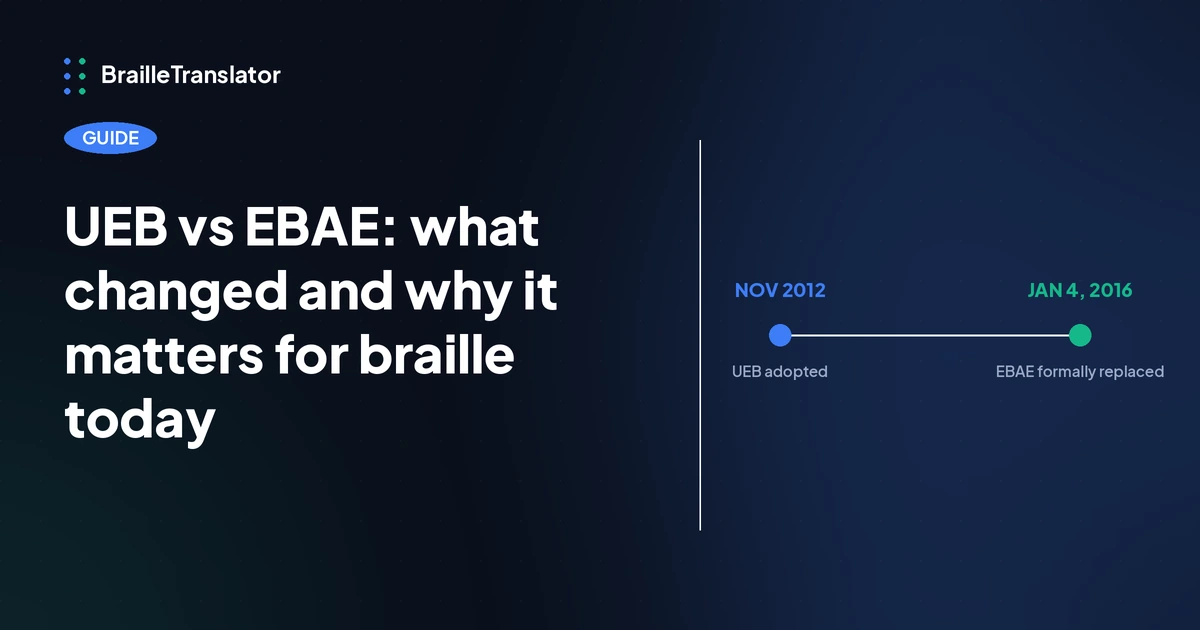
EBAE, English Braille American Edition, was the US standard for decades before UEB existed. The Braille Authority of North America (BANA) officially adopted UEB in November 2012, then set January 4, 2016, Louis Braille’s birthday, as the date UEB formally replaced EBAE nationwide. That gap between adoption and implementation gave schools and transcribers a few years to transition before the switch became official.
Official adoption, ahead of nationwide rollout
Nationwide implementation date, Louis Braille’s birthday
What actually changed between the two codes
A few concrete differences account for most of what makes older EBAE material look different from current UEB output:
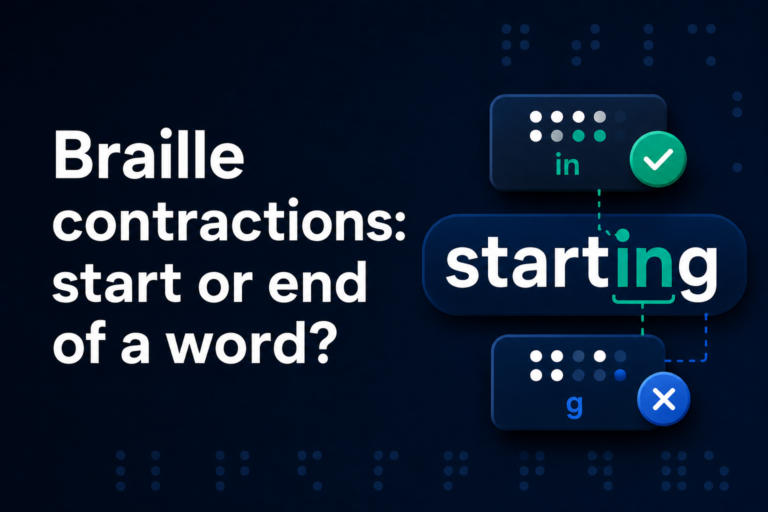
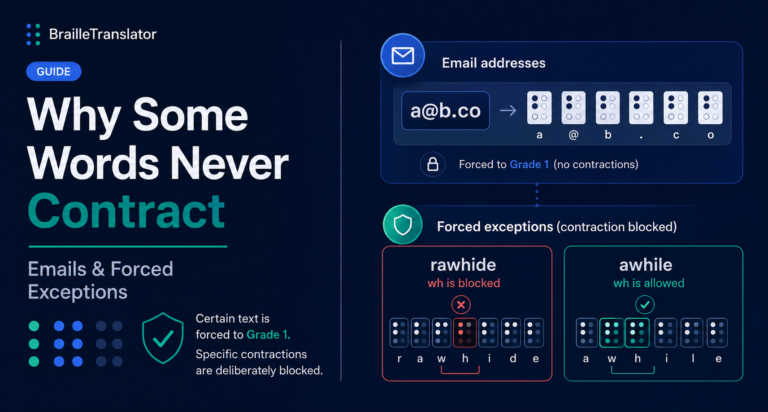
Contractions like “ally,” “ation,” “ble,” “by,” “com,” “dd,” “into,” “o’clock,” and “to” existed in EBAE but were dropped in UEB because they caused translation ambiguity or conflicted with other symbols.
EBAE justified some contractions by how a word sounded. UEB treats contractions as literal letter sequences instead, so a rule based on sound in EBAE doesn’t automatically carry over.
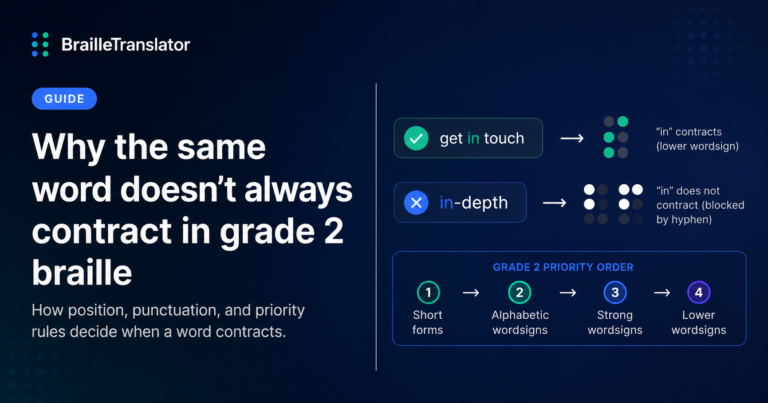
UEB allows more contractions to bridge across prefixes, suffixes, and word parts than EBAE did, changing how certain words get contracted even when the underlying letters are the same.
A handful of punctuation marks use different dot sequences in UEB than they did in EBAE. See the current UEB punctuation reference for what each mark looks like today.
None of this touches Nemeth Code, the separate system used for math and science notation. Nemeth sits outside this comparison entirely and is still used today alongside UEB, not replaced by it, which is worth knowing if you’ve seen both terms used together and weren’t sure how they relate. See our Nemeth code vs UEB guide for how the two actually relate.
For the current UEB rule set specifically, our complete grade 2 contractions reference lists all 181 contractions this translator implements today.
The same January 2016 transition also retired a separate, unrelated code, the Computer Braille Code, not to be confused with Braille ASCII, which is still very much in use today. Our guide to computer braille untangles the two.
Why this matters if you’re transcribing or reading braille today
If you’re working from material transcribed before 2016, or you learned contraction rules under the old system, applying that older logic today produces output that’s technically outdated. A braille translator built for current use needs to implement UEB rules specifically, not the retired EBAE rule set, since the two don’t always agree on the same word.
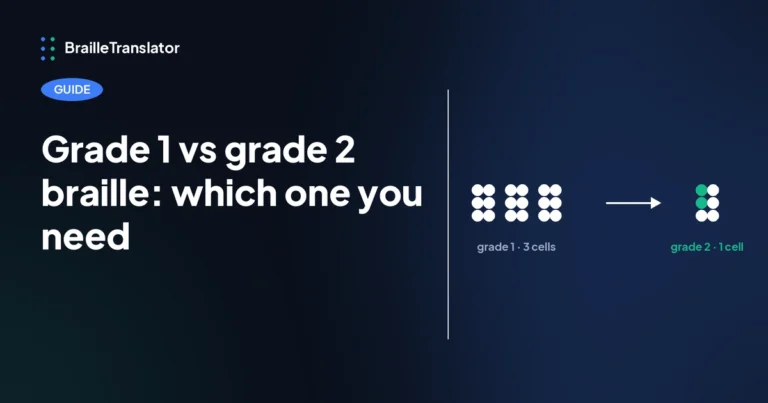
Our translator applies current UEB rules for both grade 1 and grade 2 output, not EBAE conventions, so translating a document today stays consistent with the code actually in standard use. If you want to see how those UEB rules play out specifically across grade 1 and grade 2, our grade 1 vs grade 2 braille guide covers that in more depth.
Try it in current UEB
If you want to see current UEB output directly rather than comparing it against older material, translate a line of text and check it against what you already know. That’s usually the fastest way to spot exactly what’s changed.
Translate a line of textFrequently asked questions
BANA adopted UEB in November 2012, with January 4, 2016 set as the nationwide implementation date that formally replaced EBAE in the United States.
Yes. Material transcribed before 2016 may still use EBAE conventions, which is why it can look different from braille translated under current UEB rules.
No. Nemeth Code is a separate system used for math and science notation. It’s still used alongside UEB today rather than being replaced by it.
This translator applies current UEB rules for both grade 1 and grade 2 output, not the retired EBAE code.